
Medical Dermatology
Eczema Treatment in Peachtree City, GA
Eczema (atopic dermatitis) is dry, itchy, inflamed skin that flares and settles in cycles — the "itch that rashes." It's extremely common in children and often persists into adulthood. It can't be scrubbed away or moisturized into submission once it's flaring, but with the right plan, most people get lasting control.
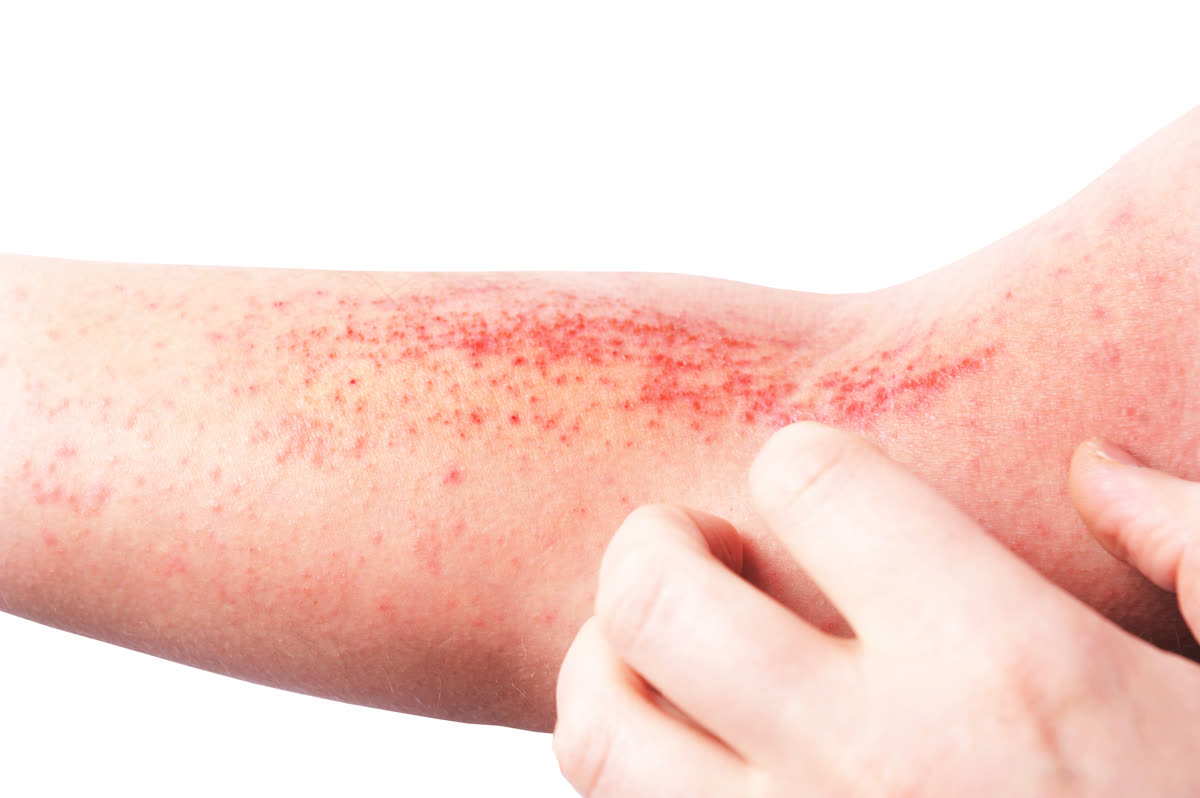
What eczema looks like
Eczema shows up as dry, red, intensely itchy patches — classically in the creases of the elbows and knees, on the hands, or on a child's cheeks. Scratching thickens the skin and keeps the cycle going. Flares are often triggered by dry weather, harsh soaps, fragrances, stress, sweat, or allergens.
"Dermatitis" is the broader family: contact dermatitis (a reaction to something touching the skin — think nickel, fragrances, or poison ivy), seborrheic dermatitis (flaky, red skin around the scalp and face), and others. Which one you have changes the treatment, and telling them apart is exactly what a skin exam is for.
How we treat it
- Skin-barrier repair — the unglamorous foundation: the right moisturizers and bathing habits, made specific instead of generic.
- Prescription topicals — steroid and non-steroid anti-inflammatories matched to the body site and severity.
- Trigger detection — including patch testing when contact allergy is suspected, and a skin biopsy when something else could be masquerading as eczema. Common triggers beyond the usual suspects: sudden temperature swings, colds and flu, wool and rough fabrics, lanolin, long soaks in water, household chemicals, and airborne allergens like mold, pollen, dust mites, and pet dander.
- Systemic and biologic therapy — for moderate-to-severe eczema, modern options like dupilumab (Dupixent) and JAK inhibitors have changed what controlled eczema looks like; our physicians prescribe and monitor them.
- Supporting care — antihistamines for itch, antibiotics when scratched skin picks up a secondary infection, topical immunomodulators, and practical home tactics: petroleum jelly on damp skin, short fingernails (and gloves at night) for kids, and a bedroom humidifier in dry months.
Eczema in children
We treat a lot of kids — 90% of eczema begins before age 5, and symptoms can start as early as two months old. Childhood eczema is exhausting for the whole family: the scratching, the lost sleep, the endless lotions. A clear, written plan (what to use where, and when) usually brings it under control, and many children improve as they grow. Eczema runs with asthma and hay fever in families, but it isn't itself an allergic reaction — even though allergy tests often come back positive.
Related: Rashes & Dermatitis · Psoriasis · Acne
This page is general education, not a diagnosis — see a dermatologist in Peachtree City about your specific skin concern.
Common questions
No. Eczema is an inflammatory condition driven by genetics and the skin barrier — you can't catch it or give it to anyone.
Eczema is a chronic condition that flares and settles. The goal of treatment is control: fewer flares, milder flares, and a fast plan for when they happen. Ongoing barrier care between flares makes the biggest difference.
Used correctly — the right strength, the right site, the right duration — topical steroids are safe and effective. Problems come from misuse. We'll give you exact instructions, and there are effective non-steroid options too.
Dupilumab (Dupixent) and newer medications have been game-changers for moderate-to-severe eczema that doesn't respond to creams. If you're a candidate, our physicians will walk you through benefits, monitoring, and insurance approval.
Sometimes — contact dermatitis can look a lot like eczema. If your rash pattern suggests a contact allergy, we may recommend patch testing to find the culprit.
Ready to have it looked at?
Same-day and next-day appointments are often available · 4.8 from 360+ Google reviews. Mon–Fri · 7:30am–5:00pm.