
Medical Dermatology
Psoriasis Treatment in Peachtree City, GA
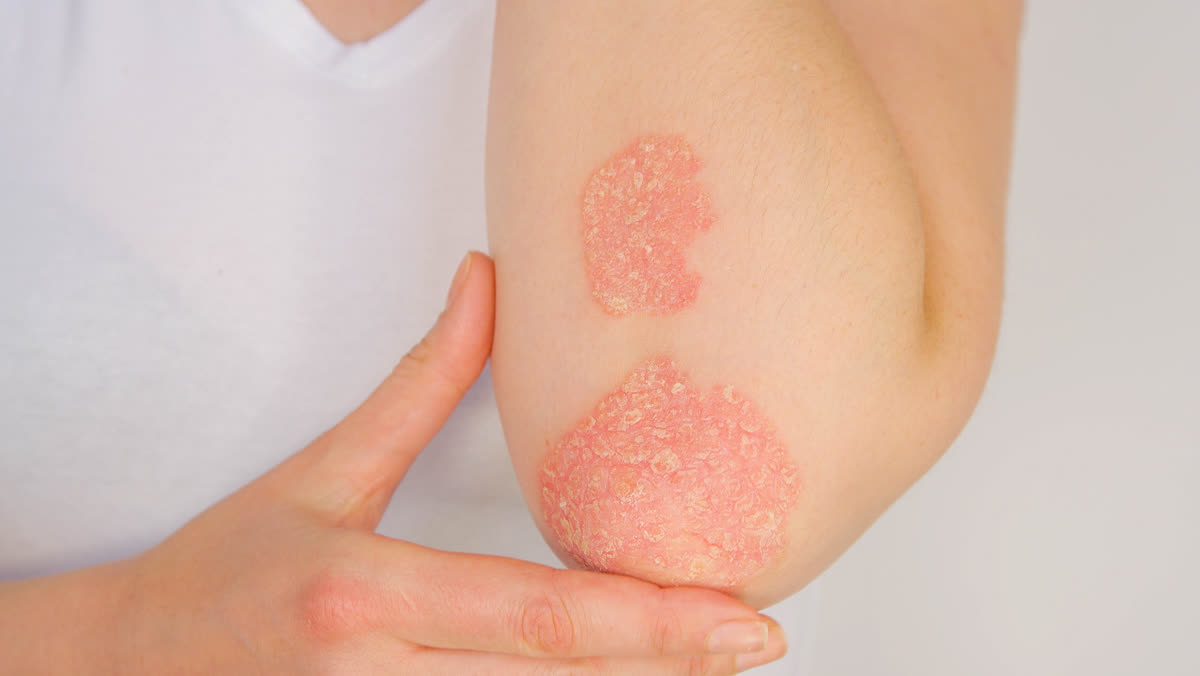
Psoriasis is a chronic immune condition that makes skin cells grow too fast, piling up into thick, red, scaly plaques — most often on the elbows, knees, and scalp. It isn't contagious, and it isn't your fault. And this is a genuinely good era to have it: modern treatments clear skin that would have been considered untreatable twenty years ago.
The forms psoriasis takes
In psoriasis, skin cells that normally mature and shed over 28–30 days race through the cycle in 3–4 days — and pile up. It appears in five main forms: plaque (the classic thick, scaly patches), guttate (small dot-like spots, often after strep), pustular (weeping pustules and intense scaling, often on hands and feet), inverse (intense inflammation in skin folds), and erythrodermic (widespread redness and shedding — the rare form that needs urgent care). Beyond the elbows, knees, and scalp, it commonly involves the hands, feet, and nails.
More than a skin condition
Psoriasis is driven by the immune system, and it can involve more than skin: up to a third of people with psoriasis develop psoriatic arthritis (stiff, swollen, or painful joints — tell us if yours ache, especially in the morning). Nails can pit and lift. Because psoriasis is also linked to cardiovascular and metabolic health, treating it well is about more than appearance.
How we treat it
- Topical therapy — prescription steroids, vitamin-D analogs, and newer non-steroid options for limited plaques.
- Scalp-specific plans — scalp psoriasis needs vehicles (solutions, foams, oils) that actually work in hair.
- Biologics and oral systemics — for moderate-to-severe psoriasis, injectable biologics and modern oral medications routinely achieve clear or almost-clear skin. Our physicians select, prescribe, and monitor them, and our staff handles the insurance authorization legwork.
The right choice depends on how much skin is involved, whether joints are involved, your health history, and your preferences. That's a conversation, not a flowchart.
Living with psoriasis
Flares are often triggered by stress, strep infections, skin injury, some medications, and alcohol. Moisturizing reduces scale and itch. And because psoriasis is a long-term condition, we build long-term relationships — the same provider, adjusting the same plan, year after year.
Related: Eczema & Dermatitis · Rashes & Dermatitis
This page is general education, not a diagnosis — see a dermatologist in Peachtree City about your specific skin concern.
Common questions
No. Psoriasis is an immune-system condition — you cannot catch it from anyone or spread it by touch.
There's no permanent cure, but modern treatment can clear plaques and keep them away long-term. Many patients on current therapies stay clear or almost clear with ongoing treatment.
All effective medications have trade-offs. Biologics are generally well tolerated, with screening before starting and monitoring during treatment. We'll go over your specific options, their track records, and what monitoring looks like.
Scalp psoriasis is common and often mistaken for stubborn dandruff. If medicated shampoos aren't cutting it, prescription scalp treatments usually make a dramatic difference.
Absolutely — joint stiffness or swelling with psoriasis can be psoriatic arthritis, and catching it early protects your joints. We coordinate with rheumatology when needed.
Ready to have it looked at?
Same-day and next-day appointments are often available · 4.8 from 360+ Google reviews. Mon–Fri · 7:30am–5:00pm.