
Medical Dermatology
Hair Loss Treatment in Peachtree City, GA
Hair loss has many causes, and they're treated completely differently — which is why the supplement aisle keeps disappointing people. The first step isn't a product; it's a diagnosis. We examine the scalp, take a careful history, and sometimes run labs or a small biopsy. Then treatment has a target.
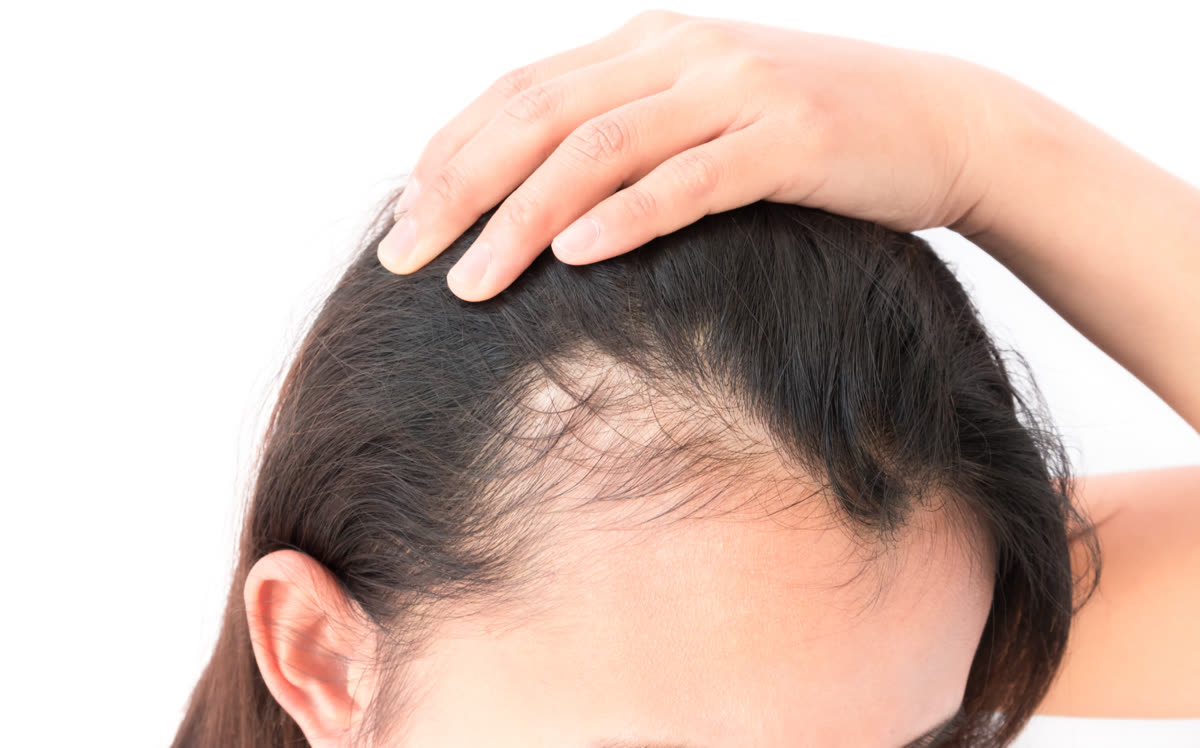
Common causes we see
- Pattern hair loss (androgenetic alopecia) — the gradual thinning most men and many women develop; genetic and very treatable when started early.
- Telogen effluvium — sudden shedding a few months after stress, illness, surgery, childbirth, or rapid weight change; usually recovers, and we rule out mimics.
- Alopecia areata — an autoimmune condition causing smooth round bald patches; newer prescription options exist for extensive cases.
- Scarring alopecias — inflammation that permanently destroys follicles; a true urgency, because early treatment preserves the hair you still have.
- Traction, fungal infection, thyroid and iron issues — and other causes we screen for.
How we treat it
Treatment depends on the diagnosis: topical minoxidil (Rogaine 5% foam or solution, the option best supported by clinical data) and oral minoxidil, finasteride and related medications, spironolactone for many women with pattern loss, anti-inflammatory scalp treatments, steroid injections for areata patches, immune-modulating therapy for extensive autoimmune loss, and lab-directed correction of deficiencies. Biotin is the one over-the-counter supplement with some supporting evidence — and if it hasn't helped after three months, stop buying it. For pattern loss, in-office PRP (platelet-rich plasma) is available through Carroll Cosmetic Club, and hair transplantation is an option when there's enough donor hair at the back of the scalp.
A few specifics worth knowing: traction alopecia from tight braids, extensions, and pulled-back styles recedes the front and sides first and can be irreversible even after the tension stops — loosening up early matters. Alopecia areata can involve the eyebrows and beard, and its course is unpredictable. Telogen effluvium generally recovers on its own once the stressor passes; treatments don't speed it up. And thickening shampoos coat the hair shaft — they don't grow hair.
Two honest truths: treatment works better at keeping hair than regrowing it — so earlier is better — and anything that works takes months, because hair grows slowly. We'll set expectations you can trust.
Related: Rashes & Dermatitis
This page is general education, not a diagnosis — see a dermatologist in Peachtree City about your specific skin concern.
Common questions
Shedding up to ~100 hairs a day is normal. Sudden clumps, a widening part, a receding line, or visible scalp are the signs worth an exam.
Often, yes. Female pattern loss and hormonal contributors call for different medication choices, and we screen for iron, thyroid, and other medical drivers more aggressively.
If shedding is caused by a deficiency, correcting it helps — that's what labs are for. Beyond that, most supermarket supplements have thin evidence. We'd rather point you to treatments with data behind them.
Sometimes — especially when scarring alopecia is suspected, because the treatment stakes are high. It's a small, quick procedure, read by our in-house dermatopathologist.
It depends on the cause. Shedding from telogen effluvium typically recovers; pattern loss responds best early; scarred follicles don't regrow — which is why we treat scarring forms urgently.
Ready to have it looked at?
Same-day and next-day appointments are often available · 4.8 from 360+ Google reviews. Mon–Fri · 7:30am–5:00pm.