
Medical Dermatology
Skin Cancer Screening & Treatment in Peachtree City, GA
Skin cancer is the most common cancer in the United States — more common than all other cancers combined, with over a million diagnoses a year — and the most curable when caught early. One in five Americans develops it. This practice is built around it: screening exams, mole mapping for patients with many moles, same-visit biopsies, pathology read in-house, and Mohs surgery performed by fellowship-trained surgeons, all without leaving our practice family.
What to watch for
Skin cancers announce themselves in different ways. Get a spot examined if it is:
- A sore that won't heal — or a spot that bleeds, crusts, and returns — classic for basal cell carcinoma
- A rough, scaly bump — growing or tender on sun-exposed skin — think squamous cell carcinoma
- A changing mole — new, growing, multi-colored, or different from your others — the melanoma pattern
- A pink pearly bump — with visible small vessels, often on the face, ears, or nose
The types, at a glance
Skin cancer isn't one disease — three types account for nearly all of it, each behaving differently. Each has its own full guide:
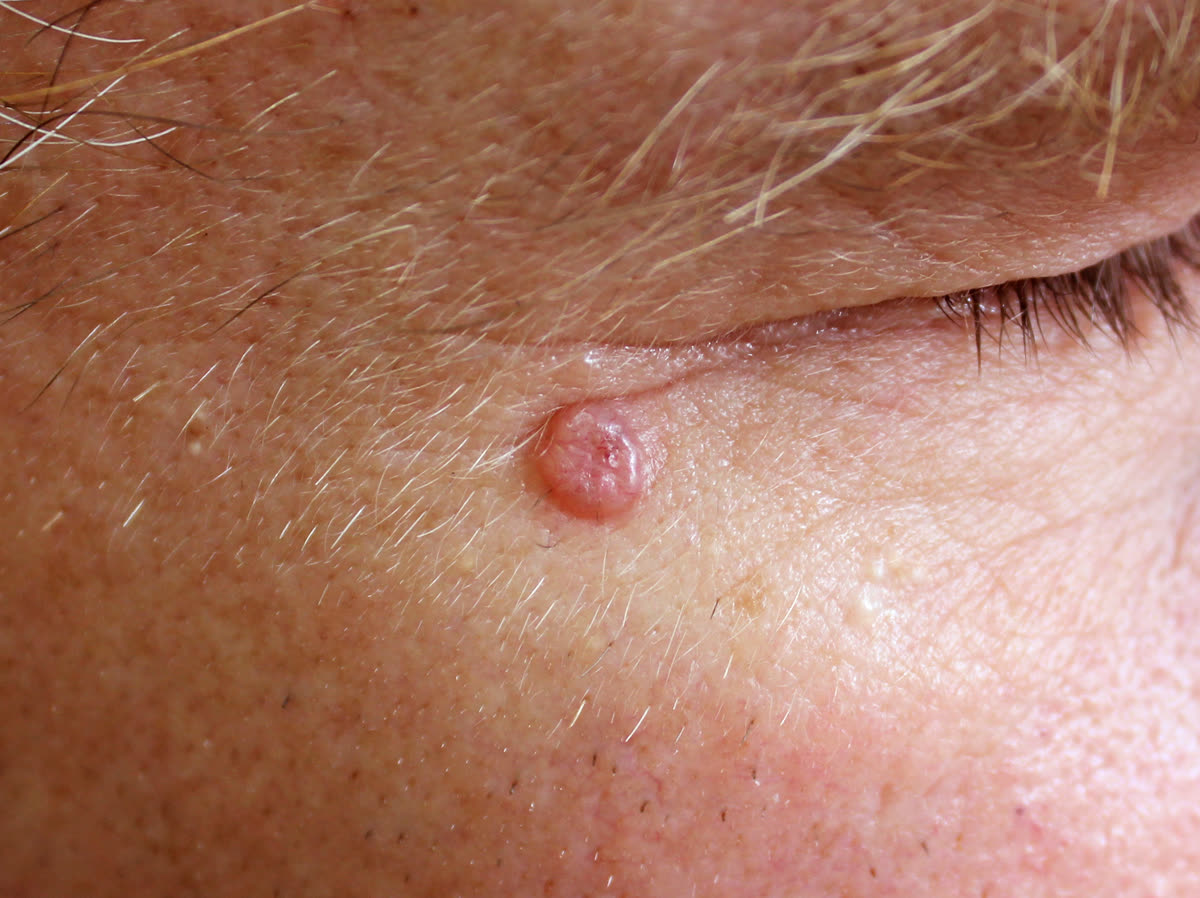 Basal cell carcinoma (BCC)About 8 in 10 skin cancers. A pearly bump or a sore that heals and reopens. Rarely spreads — but keeps growing, so early treatment means smaller repairs.Read the BCC guide →
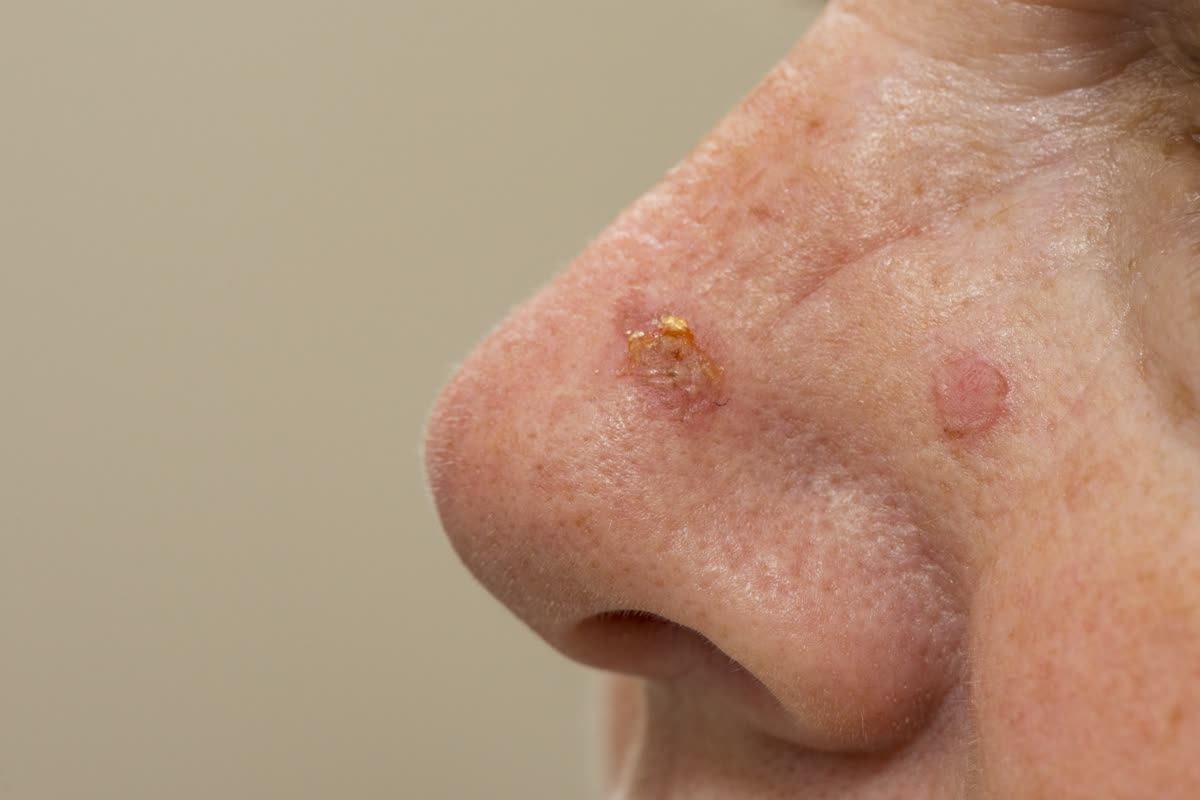 Squamous cell carcinoma (SCC)The second most common. A rough, crusted, or tender spot, often from an untreated actinic keratosis. Usually curable — treated promptly because some can spread.Read the SCC guide →
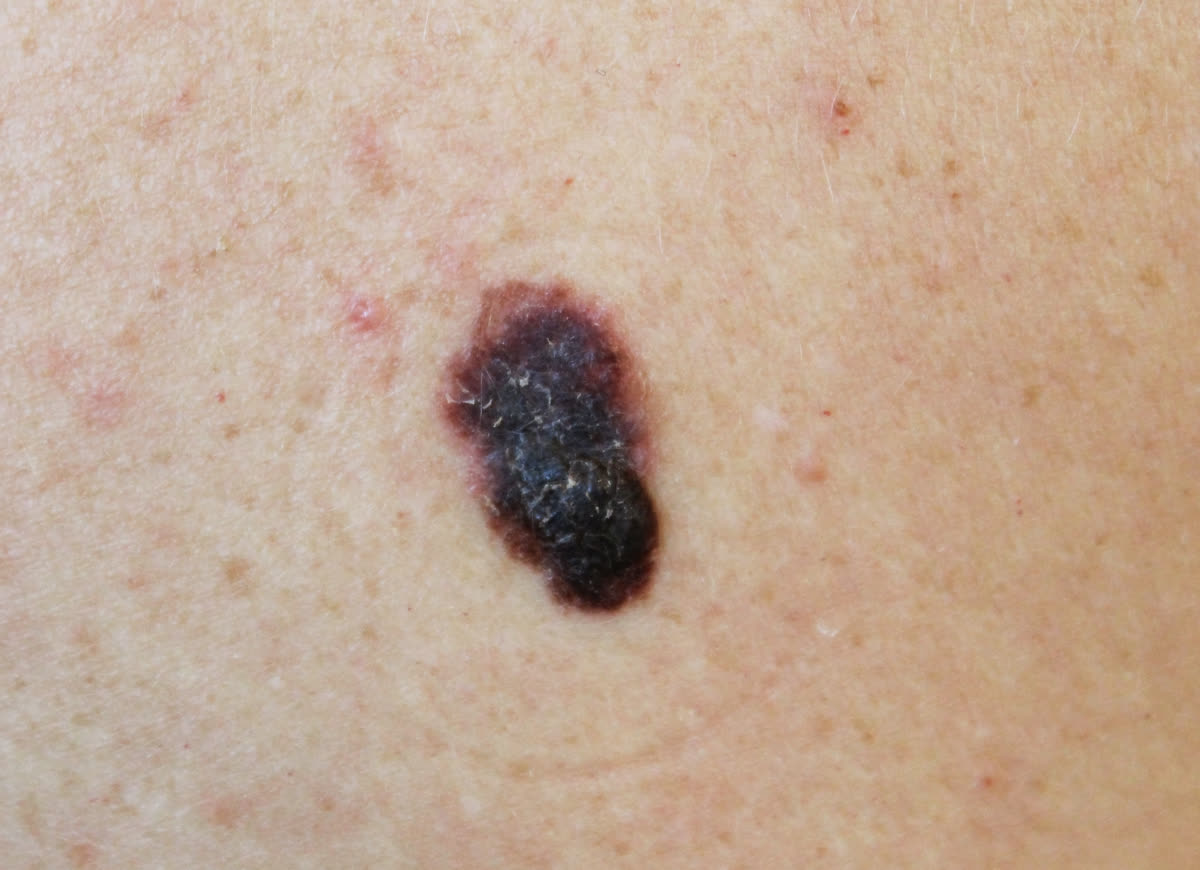 MelanomaThe most serious. Usually a new or changing dark spot — the mole that breaks the rules. Caught early it is highly curable; this is the reason mole checks exist.Read the melanoma guide →
And the warning shot: actinic keratosis (AK) — not cancer yet, but the rough, scaly pre-cancers that precede many squamous cell carcinomas. We treat them before they get the chance.
Know your ABCDEs
The five letters worth memorizing — the classic warning signs of melanoma. If a mole shows any of these, have it looked at:
One more that matters: the “ugly duckling” — the one spot that doesn't look like any of your others.
Screening and diagnosis, all under one roof
It starts with an exam — a spot check for one worry, or a full-body screening. For patients with many or unusual moles, we offer mole mapping: photographic tracking that makes change obvious from visit to visit. Suspicious spots get biopsied the same visit, and the sample is read on-site by our own board-certified dermatopathologist, Dr. Paul Haun, in our in-house dermatopathology lab. That means faster answers and a pathologist your surgeon can talk to down the hall.
Not sure it warrants a visit? Text us a photo of the spot through Klara and we’ll tell you how soon it should be seen.
Treatment, matched to the cancer
Treatment depends on the cancer, its location, and you: Mohs micrographic surgery for many cancers on the face, head, and neck (the highest cure rate with the smallest scar), surgical excision, destruction techniques for superficial cancers, topical therapy for select early lesions, and laser or radiation treatment in select situations. Our Mohs surgeons are fellowship-trained and repair the site the same day.
What treatment looks like for each type — and when each option fits — is covered in the full guides to basal cell carcinoma, squamous cell carcinoma, and melanoma.
Prevention that actually moves the needle
Daily broad-spectrum SPF 30+ on exposed skin, reapplied outdoors; hats and shade in Georgia summers; no tanning beds, ever. And the one most people skip: an annual skin exam, because the cancer you can't see yet is the cheapest one to treat.
Related: Basal Cell Carcinoma · Squamous Cell Carcinoma · Melanoma · Actinic Keratosis · Moles & Spot Checks · Skin Cancer & Mohs Surgery
This page is general education, not a diagnosis — see a dermatologist in Peachtree City about your specific skin concern.
Common questions
Soon — most skin cancers grow slowly, but melanoma is the exception that makes waiting a bad bet. We hold same-day and next-day slots for exactly this call.
We call you, explain exactly what it is, and schedule treatment — usually within our own offices, including Mohs surgery when appropriate. You will not be handed a referral and a good-luck.
Melanoma — it's the one that can spread early, which is why changing moles get fast-tracked. Basal and squamous cell are far more common and usually curable. Every type is a smaller problem the earlier it's found.
Photographic tracking of your moles over time, for patients with many or atypical ones. Instead of relying on memory, we compare today's skin against the photos — so a new or changing spot stands out immediately.
Screening visits, biopsies, and medically necessary treatment are generally covered. Our front desk verifies your benefits before procedures.
Your risk of a second one is real — after a basal cell carcinoma, roughly 4 in 10 people develop another within five years — so we'll put you on a regular exam schedule and teach you what to watch for between visits.
Ready to have it looked at?
Same-day and next-day appointments are often available · 4.8 from 360+ Google reviews. Mon–Fri · 7:30am–5:00pm.