
Medical Dermatology
Hives Treatment in Peachtree City, GA
Hives — urticaria — are raised welts that can range from tiny spots to large patches covering significant areas, and they can merge into even larger welts. A single hive typically disappears within 24 hours, and acute episodes usually last less than six weeks, though some people develop chronic hives. Roughly 20 percent of people experience hives at some point in their lives; when they keep coming back, finding the trigger is the real work — and it's work we can help with.
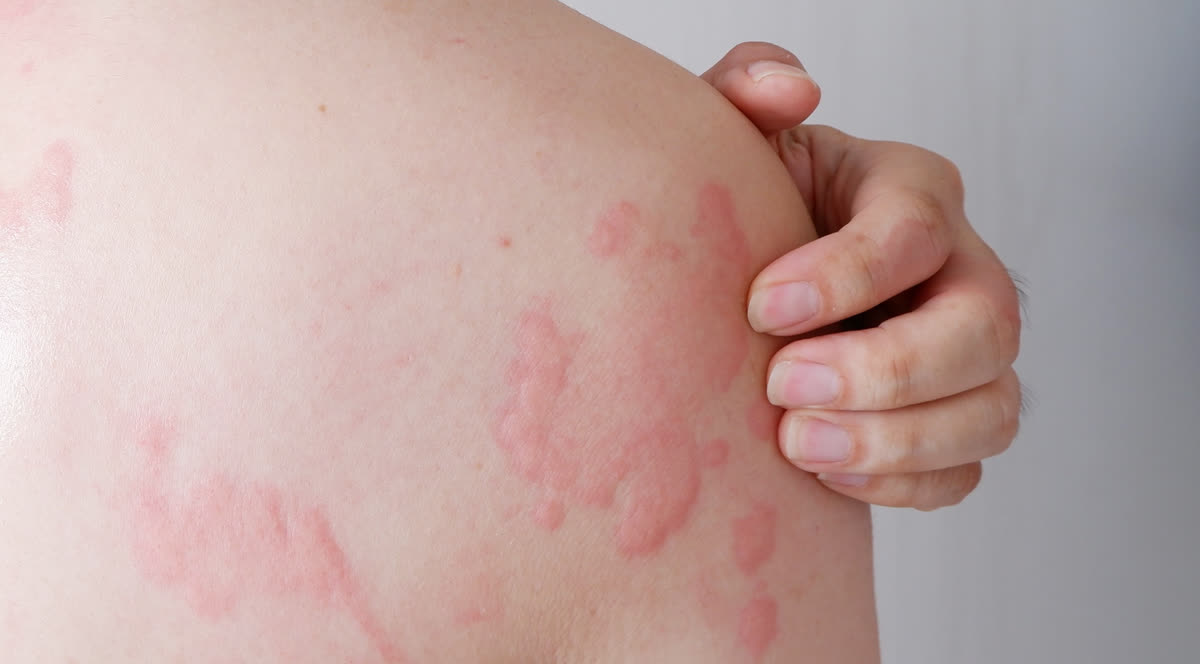
What hives look and feel like
Hives are usually easy to recognize, but a few features signal something more serious:
- Appearance — pink or red patches, often slightly raised, from tiny spots to large merged welts
- Sensation — intense itching and a feeling of warmth; the affected areas may swell
- Timing — an individual hive fades within 24 hours; acute episodes usually last under six weeks
- Warning signs — deeper swelling of the eyelids and mouth (angioedema) is more serious — and difficulty breathing or swallowing requires immediate medical attention
What triggers hives
Allergic reactions are the most common trigger — people allergic to pollen, mold, foods, insects, fragrances, dyes, medications, and other substances are more likely to develop hives. But hives aren't only about allergies: infections such as colds, illnesses like lupus and thyroid disease, and physical triggers — heat, cold, sunlight, exercise, stress, alcohol, chemicals, excessive scratching, or pressure on the skin — can all set them off.
Diagnosis and treatment
When the cause isn't obvious, diagnosis may involve allergy testing or blood tests to exclude underlying illnesses or infections, and occasionally a skin biopsy. The primary treatment is antihistamines — over-the-counter or prescription. Other treatments include medications to reduce inflammation and cortisone for short-term relief; severe cases, especially those involving angioedema, may require epinephrine injections.
At home, mild to moderate hives can be managed with cool, wet compresses on the affected areas — and if you have known triggers, avoiding those allergens is the single most effective way to prevent outbreaks.
Related: Rashes & Dermatitis · Eczema & Dermatitis
This page is general education, not a diagnosis — see a dermatologist in Peachtree City about your specific skin concern.
Common questions
When they come with deeper swelling of the eyelids or mouth (angioedema), or any difficulty breathing or swallowing — that requires immediate medical attention, not an appointment.
An individual welt typically disappears within 24 hours, and acute episodes usually resolve within six weeks. Hives that persist longer are considered chronic — and worth a workup.
Antihistamines — over-the-counter or prescription — are the primary treatment. Depending on severity, we may add medication to reduce inflammation or short-term cortisone; severe reactions can require epinephrine injections. Cool, wet compresses help at home.
Often, yes — the history does a lot of the work, and allergy testing or blood tests can rule out underlying illnesses or infections. Occasionally a skin biopsy helps. Once a trigger is identified, avoiding it is the best prevention there is.
Ready to have it looked at?
Same-day and next-day appointments are often available · 4.8 from 360+ Google reviews. Mon–Fri · 7:30am–5:00pm.