
Medical Dermatology
Melasma Treatment in Peachtree City, GA
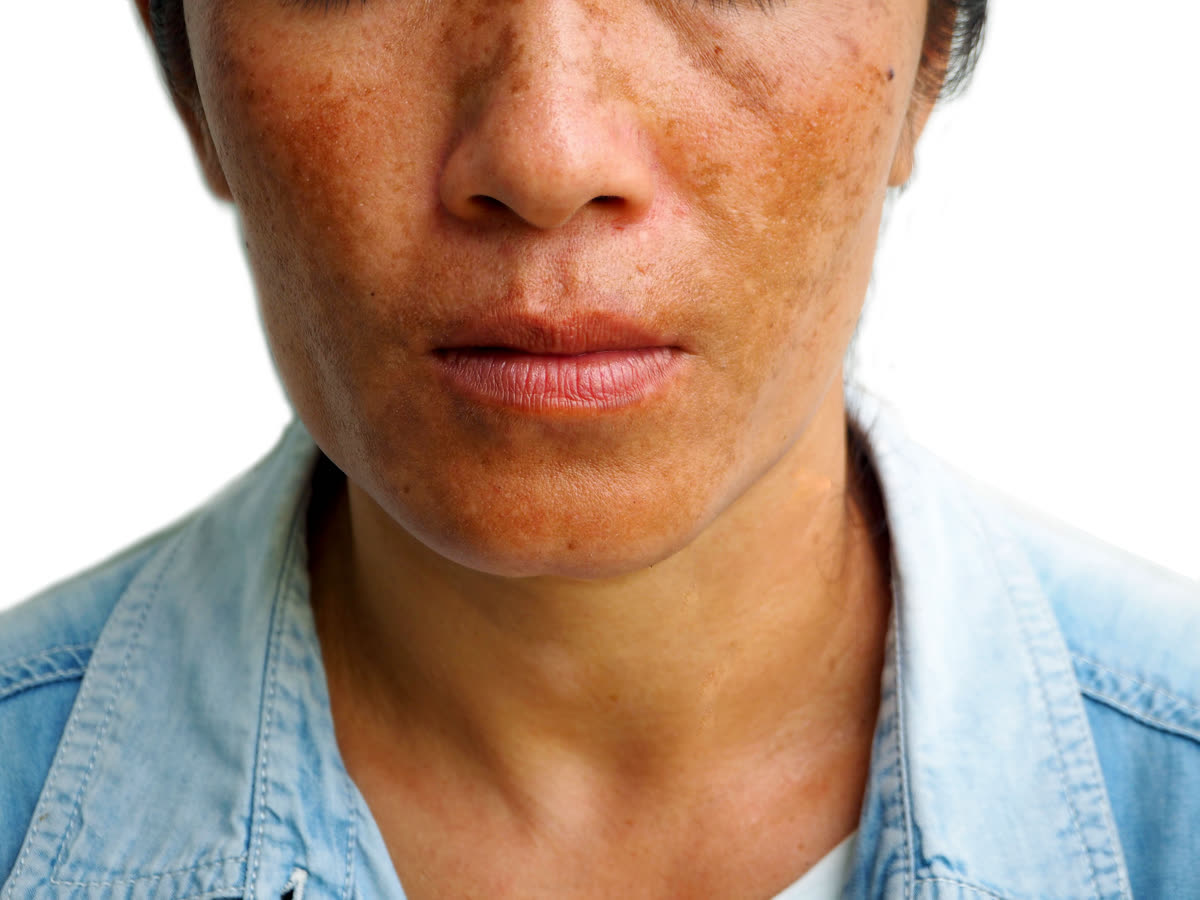
Melasma is a common condition that causes brown or gray patches on sun-exposed areas of the face — usually symmetrical across the cheeks, forehead, nose, chin, or upper lip. It's strongly tied to hormones and sun, which is why it's often called the "pregnancy mask." It causes no physical discomfort, but it can be a significant cosmetic concern — and between prescription creams, peels, and lasers, there's a real treatment ladder for it.
Who develops melasma
Melasma can affect anyone but is more common in young women, particularly those with darker or olive skin tones. It's linked to the female hormones estrogen and progesterone, which makes it prevalent among pregnant women and those using hormone-based birth control — especially oral contraceptives — or undergoing hormone replacement therapy. Sun exposure is a significant risk factor, particularly in tropical climates, and certain skin care products can exacerbate the condition. There's a hereditary component too: a family history of melasma makes you more likely to develop it.
Appearance and diagnosis
Melasma typically presents as brown or gray patches, usually symmetrical on both sides of the face. It primarily affects the face but can also appear on other frequently sun-exposed areas, such as the neck and forearms. Diagnosis is often based on the appearance of the skin, but a Wood's lamp examination or a skin biopsy may be performed to confirm the diagnosis and rule out other conditions.
How we treat it
Treatment starts with topical creams — ingredients like hydroquinone, tretinoin, azelaic acid, and kojic acid can help lighten the dark patches. (If you are pregnant or breastfeeding, tell us first: hydroquinone and tretinoin are avoided during pregnancy, and we'll build a plan that's safe for now.) Beyond prescriptions, treatments such as microdermabrasion, chemical peels, or the Cosmelan Mask may be recommended; these aren't typically covered by insurance and are available through our cosmetic side, Carroll Cosmetic Club. For severe cases, laser treatments may be employed to target very dark discolorations.
Prevention carries half the load: avoiding sun exposure and consistently using sunscreen are essential, particularly for those at high risk such as pregnant women or anyone on hormone therapies. And there's encouraging news — melasma often diminishes several months after childbirth or after stopping hormone treatments or birth control.
Cosmetic options, once it's controlled
Cosmetic options: alongside medical therapy, chemical peels and IPL photofacial treatments at our in-office med spa, Carroll Cosmetic Club, can help fade discoloration.
This page is general education, not a diagnosis — see a dermatologist in Peachtree City about your specific skin concern.
Common questions
Sometimes. Melasma often diminishes several months after childbirth or after stopping hormone-based birth control or hormone treatments. When it lingers, treatment can help lighten it.
A combination of hormones — estrogen and progesterone — and sun exposure, with genetics stacking the odds. Pregnancy, oral contraceptives, and hormone replacement therapy are common triggers, and certain skin care products can make it worse.
Treatments such as microdermabrasion, chemical peels, and the Cosmelan Mask are not typically covered by insurance. We'll go over options and costs up front so there are no surprises.
Yes. Sun exposure is a significant risk factor for melasma, and prevention is crucial — consistent sunscreen use and avoiding sun exposure are essential, especially for people at higher risk such as pregnant women or those on hormone therapies.
Ready to have it looked at?
Same-day and next-day appointments are often available · 4.8 from 360+ Google reviews. Mon–Fri · 7:30am–5:00pm.