
Medical Dermatology
Actinic Keratosis Treatment in Peachtree City, GA
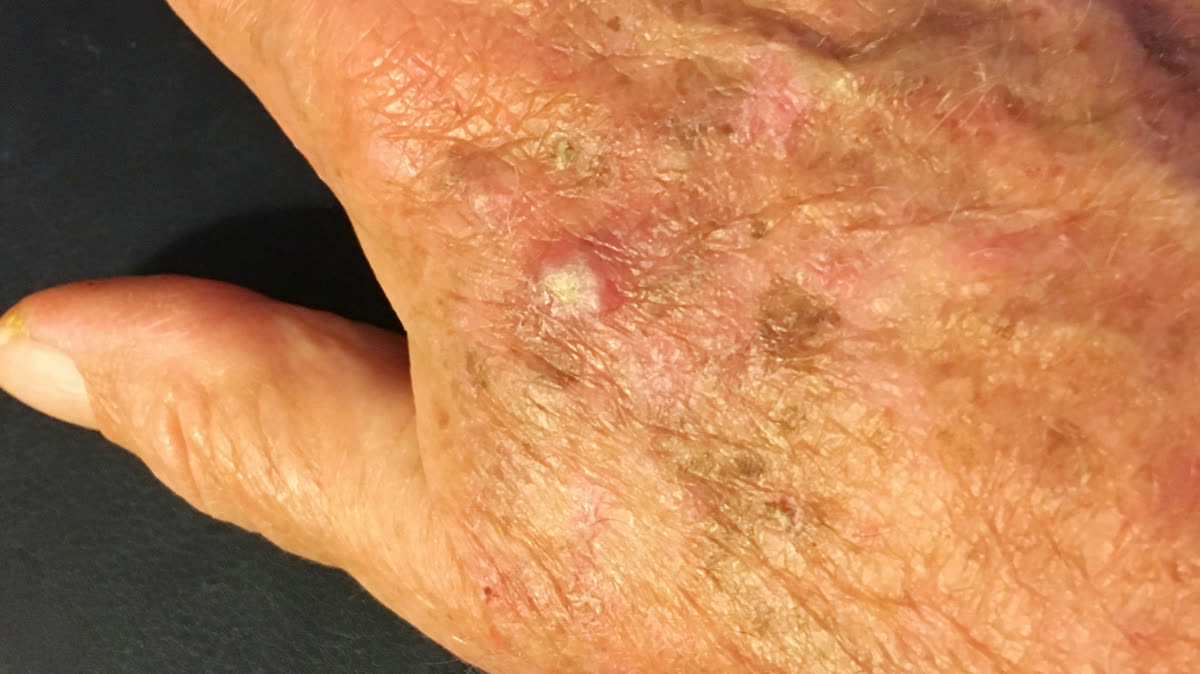
Actinic keratoses (AKs) are coarse, scaly patches caused by excessive sun exposure — and they are the step before skin cancer, not just a texture problem. An estimated 40% of squamous cell carcinomas originate as AKs, and even a trained eye can find it nearly impossible to tell the two apart without a biopsy. The good news: AKs are treatable, and treating them is how you keep them from evolving into something worse.
Why actinic keratoses need treatment
AKs can potentially evolve into severe skin cancers. Squamous cell carcinoma — the second most common cause of skin cancer fatalities in the United States — is estimated to originate from AKs about 40% of the time, and without a skin biopsy, distinguishing an AK from a squamous cell carcinoma can be nearly impossible even for a doctor. That's why organizations including the American Cancer Society, the Skin Cancer Foundation, and the American Academy of Dermatology all advise that people with AKs seek medical treatment.
How we treat actinic keratoses
Treatment depends on how many AKs you have and where they are:
- Cryotherapy — freezing individual spots with liquid nitrogen, the most common in-office treatment for scattered AKs. Quick, effective, and done at the same visit.
- Field treatments — prescription creams such as 5-fluorouracil, imiquimod, or tirbanibulin that treat an entire sun-damaged area over days to weeks, clearing the AKs you can see and the ones just forming beneath the surface.
- Photodynamic therapy (Levulan + Blu-U) — a light-activated field treatment done in our office, described below.
Any spot that looks thicker, tender, or different from your other AKs may be biopsied to make sure it isn’t already a squamous cell carcinoma.
Levulan and Blu-U blue light therapy
Our clinics provide a two-step treatment for actinic keratoses on the face or scalp that combines Levulan with Blu-U blue light therapy. First, the Levulan topical solution — a naturally occurring acid in the body — is applied to the skin, where it transforms into a chemical that significantly increases the skin cells' sensitivity to light. After a set waiting period, the treatment area is illuminated with a special blue light that destroys the affected cells. The method has proven effective in clinical trials, and treatment for AKs might be covered by your insurance.
During the light step, many patients in clinical trials reported a stinging and/or burning sensation that typically subsides immediately after treatment. Some see temporary redness and swelling of the treated areas and surrounding skin, usually resolving within four weeks.
Preventing new ones
Prolonged sun exposure is the primary cause of AKs, so the most effective prevention is a comprehensive sun protection strategy: wear sun-protective clothing, avoid the sun during midday, seek shade, and apply a broad-spectrum sunscreen with a sun protection factor (SPF) of at least 15.
Related: Skin Cancer · Moles & Spot Checks
This page is general education, not a diagnosis — see a dermatologist in Peachtree City about your specific skin concern.
Common questions
Not yet — it's a precancerous growth. But an estimated 40% of squamous cell carcinomas originate from AKs, and telling the two apart without a biopsy is nearly impossible. That's why the major skin cancer organizations advise treatment rather than waiting.
Many patients feel a stinging or burning sensation while the light is on, and it typically subsides immediately after treatment. Temporary redness and swelling of the treated area can follow and usually resolve within four weeks.
Treatment for actinic keratoses might be covered by your insurance plan. Blue light therapy for acne, by contrast, generally is not — we'll help you verify your coverage before treatment.
Yes — blue light on its own, without drugs or antibiotics, can also be used to manage moderate acne. Patients simply sit near the light for about 15 minutes per session, as prescribed. The treatments are considered safe and most patients find them easy to tolerate, though blue light for acne generally isn't covered by insurance.
Ready to have it looked at?
Same-day and next-day appointments are often available · 4.8 from 360+ Google reviews. Mon–Fri · 7:30am–5:00pm.