
Medical Dermatology
Dysplastic Nevus Evaluation in Peachtree City, GA
A dysplastic nevus — an atypical mole — is a mole that doesn't quite follow the rules: irregular or blurry borders, varied coloring from pink to dark brown, and usually larger than a common mole. Most are benign and stay that way. But atypical moles carry a higher likelihood of progressing to melanoma than ordinary moles do, so the right response isn't alarm — it's a professional evaluation and a monitoring plan.
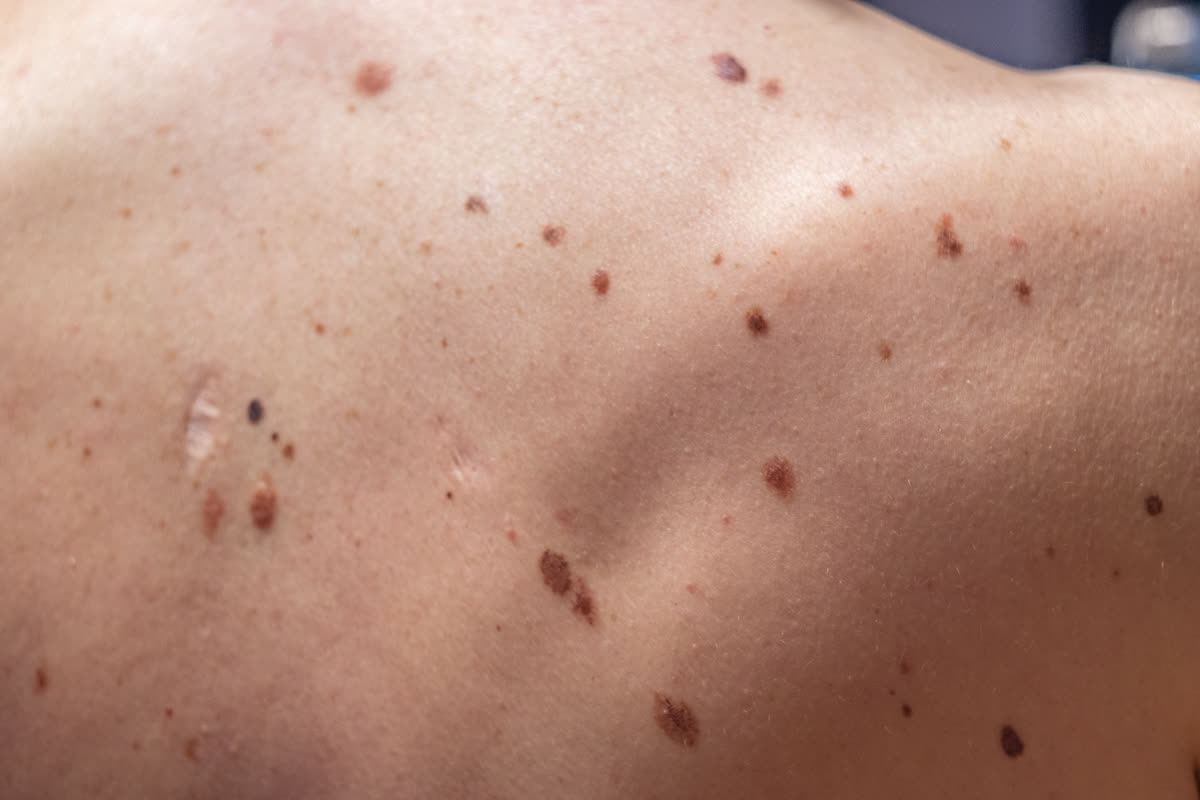
How an atypical mole differs from a common mole
Atypical moles can appear anywhere on the body but are most commonly found on the trunk. Hallmarks include:
- Borders — irregular or blurry edges rather than a crisp outline
- Color — varied coloring that ranges from pink to dark brown
- Size — tend to be larger than standard moles
- Surface — can be either flat or raised
Who develops atypical moles
Genetics play a real role: people with a family history of melanoma are at increased risk of developing atypical moles — and of melanoma itself. And while dysplastic nevi are benign, studies from the National Cancer Institute indicate that these moles have a higher likelihood of progressing to melanoma, a serious skin cancer, compared to ordinary moles. Most atypical moles remain non-cancerous, but the presence of multiple atypical moles increases the risk of developing melanoma — which is exactly why they're worth tracking.
Monitoring, prevention, and when to act
You can't change your genes, but you can lower the melanoma risk associated with dysplastic nevi: practice daily sun protection, avoid excessive sun exposure, and use sunscreen consistently. Check your own skin regularly, and schedule a dermatology review every six to twelve months.
Any change in a mole's color, size, or shape — or a mole that starts to bleed, ooze, or itch — warrants immediate medical examination. Diagnosing melanoma requires a biopsy, where tissue is removed and analyzed for cancer cells. Most atypical moles, however, do not require removal unless they show signs of change.
Related: Moles & Spot Checks · Skin Cancer
This page is general education, not a diagnosis — see a dermatologist in Peachtree City about your specific skin concern.
Common questions
No — dysplastic nevi are benign. They matter because National Cancer Institute studies show they progress to melanoma more often than ordinary moles, and having multiple atypical moles raises overall melanoma risk. Evaluation and monitoring are the answer, not panic.
Usually not. Most atypical moles don't require removal unless they show signs of change. If a mole changes color, size, or shape, or starts to bleed, ooze, or itch, it needs an immediate exam — and a biopsy is how melanoma is actually diagnosed.
With dysplastic nevi, plan on a dermatology review every six to twelve months, plus regular skin self-checks at home between visits.
Yes, meaningfully: daily sun protection, avoiding excessive sun exposure, consistent sunscreen use, and keeping up with skin checks so any change gets caught early.
Ready to have it looked at?
Same-day and next-day appointments are often available · 4.8 from 360+ Google reviews. Mon–Fri · 7:30am–5:00pm.