
Medical Dermatology
Nail Fungus Treatment in Peachtree City, GA
Fungal nail infections are caused by a group of fungi known as dermatophytes, which can infect the nail, the dead tissue of the outer skin layer, and hair. They're far more common in toenails than fingernails, and they usually announce themselves as a white or yellow spot under the tip of the nail before slowly thickening, discoloring, and crumbling the nail from there. Over-the-counter products are often ineffective — prescription treatment is usually what works.
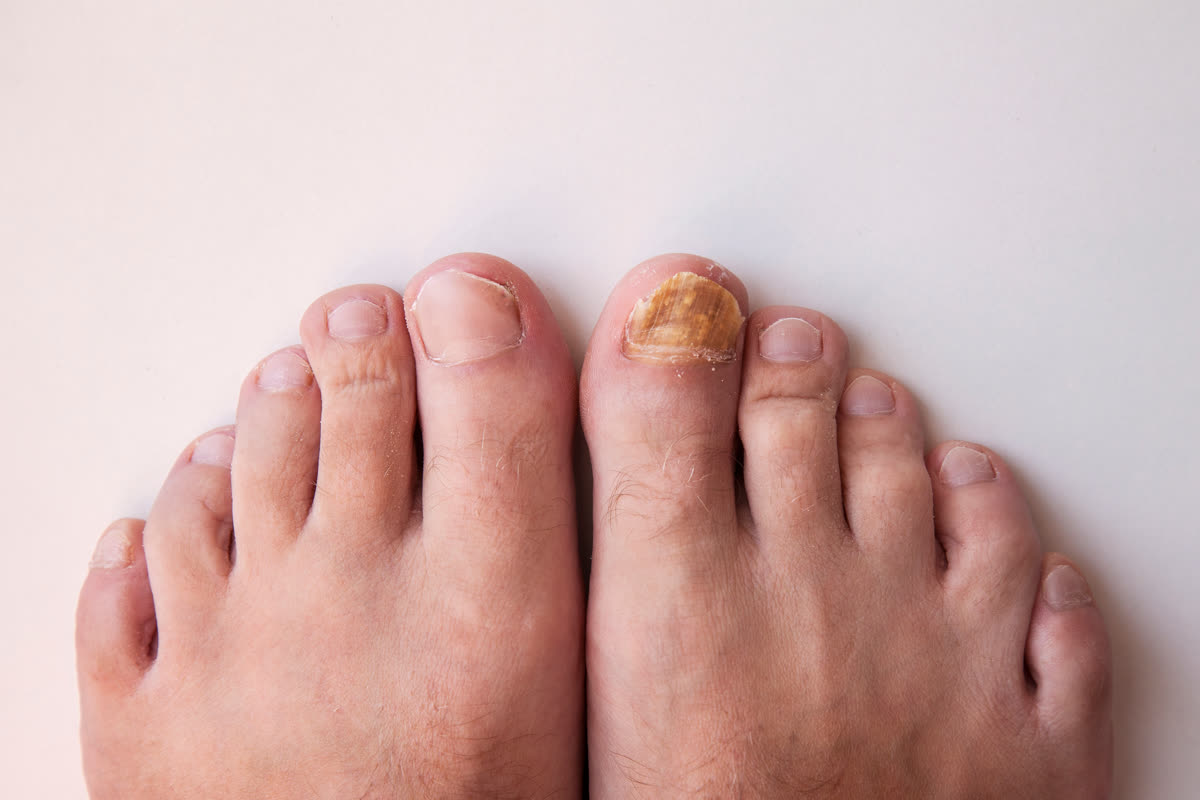
Symptoms of nail fungus
It typically becomes apparent as a white or yellow spot under the tip of a nail. As the infection progresses, you may notice:
- Discoloration — visible white or yellow streaks and loss of shine
- Texture changes — brittleness, crumbling at the nail's edge, or thickening of the nail
- Shape changes — the nail's shape distorts as the infection advances
- Lifting — loosening or lifting of the nail
Who gets nail fungus
Fungi thrive in warm, moist environments — swimming pools, shower rooms, and gyms are common places to pick up an infection. Nail fungus is predominantly seen in adults, becomes more common with age, and is rare in children. Risk is higher for people who:
- Frequently wear closed footwear
- Have very moist skin
- Have compromised immune systems or poor circulation
- Suffer from psoriasis
- Have existing nail diseases or deformed nails
- Have minor skin or nail injuries
- Receive manicures or pedicures using non-sterilized tools
Diagnosis and treatment
Diagnosis can be confirmed through examination, microscopic viewing of nail scrapings, or lab processing of nail samples — worth doing, because several non-fungal nail problems can look similar.
If left untreated, fungal nail infections can become chronic and cause lasting damage to the nail, and over-the-counter treatments are often ineffective. Prescription oral antifungals are the usual approach — typically taken for two to three months for toenail infections, with fingernail infections often resolving quicker. Laser treatments have also been effective, usually requiring about six sessions. In severe cases, removal of the infected nail might be necessary.
One expectation to set: the infection is considered resolved when a new, healthy nail has completely regrown — which can take up to a year. The medicine finishes its job long before the nail finishes showing it.
Related: Athlete's Foot · Psoriasis
This page is general education, not a diagnosis — see a dermatologist in Peachtree City about your specific skin concern.
Common questions
Over-the-counter treatments are often ineffective against fungus living under and within the nail. Prescription oral antifungals and laser treatment are the approaches that reliably reach the problem.
Oral antifungals typically run two to three months for toenail infections — fingernails often resolve quicker — and laser treatment usually requires about six sessions. Full resolution, meaning a completely regrown healthy nail, can take up to a year.
Fungi thrive in warm, moist environments like pools, shower rooms, and gyms. Closed footwear, very moist skin, minor skin or nail injuries, non-sterilized manicure or pedicure tools, psoriasis, poor circulation, and weakened immunity all raise risk — and it becomes more common with age.
The infection can become chronic and cause lasting damage to the nail. Severe cases sometimes require removal of the infected nail — earlier treatment is easier treatment.
Ready to have it looked at?
Same-day and next-day appointments are often available · 4.8 from 360+ Google reviews. Mon–Fri · 7:30am–5:00pm.