
Medical Dermatology
Athlete's Foot Treatment in Peachtree City, GA
Athlete's foot — tinea pedis — is a fungal infection that typically starts between the toes, where shoes keep things warm, dark, and moist: exactly what the fungus likes. It earned its name from the pool decks, showers, and locker rooms where it spreads, but you don't have to be an athlete to catch it. Most cases clear with the right antifungal and a few habit changes; the stubborn ones are why we're here.
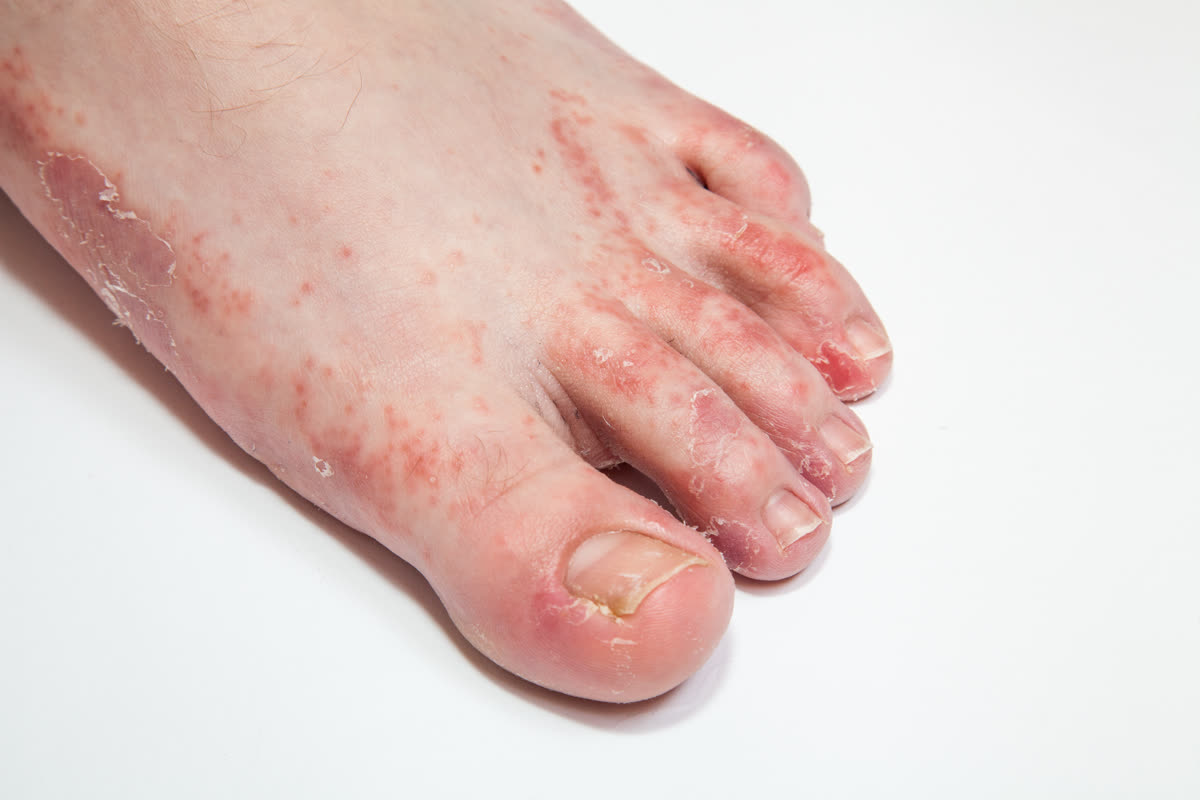
Symptoms of athlete's foot
Athlete's foot typically starts between the toes and can extend to the soles and toenails. Watch for:
- Itching and burning — often the first and most persistent symptoms
- Dry, scaling skin — flaking and peeling, sometimes with inflammation
- Blistering — small blisters in more active infections
- Cracked or bleeding skin — in severe cases, cracks let bacteria in — causing bad odors and further inflammation
How it spreads
The fungus lives on floors and in socks, shoes, and clothing, and it spreads through direct contact with contaminated objects — areas around swimming pools, showers, and locker rooms are particularly prone to harboring it. It needs a warm, moist environment to actually infect the skin, which is why sweaty, enclosed shoes set the stage.
Left alone, athlete's foot can extend to the soles of the feet and the toenails — and scratching the infected area and then touching other parts of the body can spread it to places like the groin and underarms.
Complications matter more for some people: the elderly, people with diabetes, those with chronic leg swelling, those who have had veins removed (such as for heart bypass surgery), and patients with weakened immune systems face a higher risk when cracked skin lets bacteria invade.
How we treat it
Treatment starts with keeping the affected area clean and dry. Light, airy shoes made of leather or other breathable materials help — non-breathable materials like vinyl keep moisture trapped around the feet, fostering fungus growth. Absorbent socks, such as cotton socks that wick moisture away from the feet, a medicated foot powder, and soaks in a drying solution like aluminum acetate (Burrow's solution or Domeboro's solution) all help keep feet dry.
Antifungal creams treat the infection itself — medications like miconazole or clotrimazole are commonly used, and your provider will recommend a specific one. Treatment should typically continue for up to four weeks. If you notice increased redness, swelling, or bleeding, or the infection isn't improving, come in — a bacterial infection may also be present, and that can require an antibiotic.
Related: Nail Fungus · Tinea Versicolor
This page is general education, not a diagnosis — see a dermatologist in Peachtree City about your specific skin concern.
Common questions
Antifungal creams typically need up to four weeks of consistent use. Stopping early when the skin looks better is the most common reason the infection comes right back.
If the infection isn't improving with treatment, or you notice increasing redness, swelling, or bleeding. When bacteria enter through cracked skin, an antibiotic may be required in addition to the antifungal.
Yes — it can extend to the soles and toenails, and scratching the infected area and then touching other skin can carry it to the groin or underarms. Treating it early keeps it contained.
Keep feet clean and dry, choose breathable shoes (leather over vinyl), wear absorbent cotton socks that wick moisture, and use a medicated foot powder. Be mindful around pools, showers, and locker room floors — that's where the fungus waits.
Ready to have it looked at?
Same-day and next-day appointments are often available · 4.8 from 360+ Google reviews. Mon–Fri · 7:30am–5:00pm.