
Medical Dermatology
Poison Ivy Treatment in Peachtree City, GA
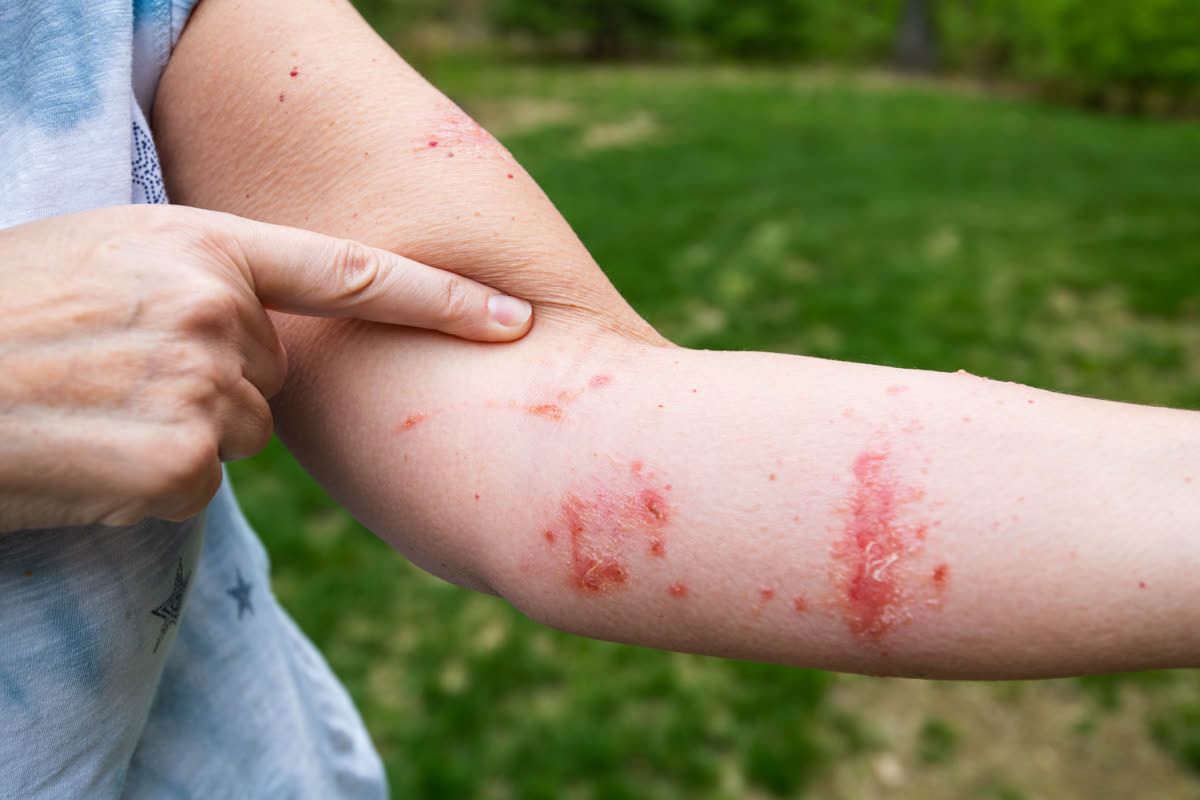
Poison ivy dermatitis is an allergic reaction to touching poison ivy, poison oak, or poison sumac — a form of contact dermatitis. The trigger is urushiol, an oil in the plants' sap that clings to skin, tools, and clothing, and can even remain under fingernails for days unless washed off thoroughly with soap and water. Most rashes run their course in one to three weeks; the miserable ones, and the risky ones, are the reason to call us.
How exposure happens
Anyone can encounter these plants, especially in wooded areas where they're prevalent — hikers, campers, and outdoor workers run the highest risk. Contact doesn't have to be direct: sap on objects can cause a reaction, and burning or mowing the plants can aerosolize particles that reach skin, eyes, and lungs.
Reports indicate that poison ivy plants have grown larger and contain more urushiol oil than in the past, increasing the likelihood of severe reactions. The best precaution is learning to recognize the plants and wearing protective clothing — long pants and sleeves — in areas where they might grow.
Symptoms
Itching, burning sensations, redness, and swelling — sometimes with blisters or hives — usually develop within 8 to 48 hours of contact, and the eyes and mouth areas can be affected too. The rash itself is not contagious and cannot spread from person to person, but urushiol oil can remain on objects like garden gloves or clothing for several days and still cause reactions until it's cleaned off. Typically, the rash lasts between one and three weeks.
Treatment: the first hour and the first week
If you know you've been exposed, immediately wash the area with soap and cold water — doing so within an hour can reduce the severity of the reaction. Cold matters: hot water opens pores and allows more oil into the skin. Flush your eyes with water if they were exposed, and thoroughly wash contaminated clothing and objects.
For the rash itself, over-the-counter antihistamines can alleviate symptoms, while topical steroids, anti-itch creams, or calamine lotion relieve the itching and burning. Most cases resolve on their own within a few weeks. Severe cases may be treated with oral or intramuscular steroids — and severe reactions, difficulty breathing, or any chance the plant's toxins were ingested or inhaled require immediate medical attention.
Related: Rashes & Dermatitis · Eczema & Dermatitis · Hives (Urticaria)
This page is general education, not a diagnosis — see a dermatologist in Peachtree City about your specific skin concern.
Common questions
No — the rash itself can't spread from person to person. What keeps causing trouble is urushiol oil lingering on garden gloves, clothing, and tools for days. Wash anything that touched the plant.
Within an hour is the goal. Use soap and cold water — cold, because hot water opens pores and lets more oil into the skin. Prompt washing can genuinely reduce the severity of the reaction, and flush your eyes if they were exposed.
Come in for severe or widespread reactions — prescription oral or intramuscular steroids can calm them. Seek immediate medical attention for difficulty breathing or if the plant's toxins may have been inhaled or ingested, such as from burning brush.
Typically one to three weeks, with symptoms appearing 8 to 48 hours after contact. Antihistamines, topical steroids, anti-itch creams, and calamine lotion make the wait more bearable.
Ready to have it looked at?
Same-day and next-day appointments are often available · 4.8 from 360+ Google reviews. Mon–Fri · 7:30am–5:00pm.