
Medical Dermatology
Shingles Treatment in Peachtree City, GA
Shingles — herpes zoster — is a painful skin rash caused by the varicella-zoster virus, the same virus that causes chickenpox (and a different virus from the one that causes sexually transmitted herpes). An estimated one in three people in the United States will develop shingles in their lifetime. The single most useful fact: antiviral treatment works best when started within 72 hours of the first pain or rash — so if you suspect shingles, don't wait.
Who gets shingles
Anyone who has had chickenpox — or received the chickenpox vaccine — is at risk. After recovery, the virus remains dormant in the body and may reactivate years later as shingles. Why it reactivates isn't entirely clear, but the risk increases with age, and people over 60 who had chickenpox before the age of one are particularly susceptible. Younger people, including children, can also develop shingles, especially if their immune systems are weakened by illness or medication. It's rare, but possible, to have shingles more than once.
You can't catch shingles itself from another person — but the fluid in the blisters does carry the varicella-zoster virus, and direct contact with it can give chickenpox (not shingles) to someone who has never had chickenpox or the vaccine. Keep the rash covered until it crusts over, and avoid contact with an active shingles rash.
Symptoms
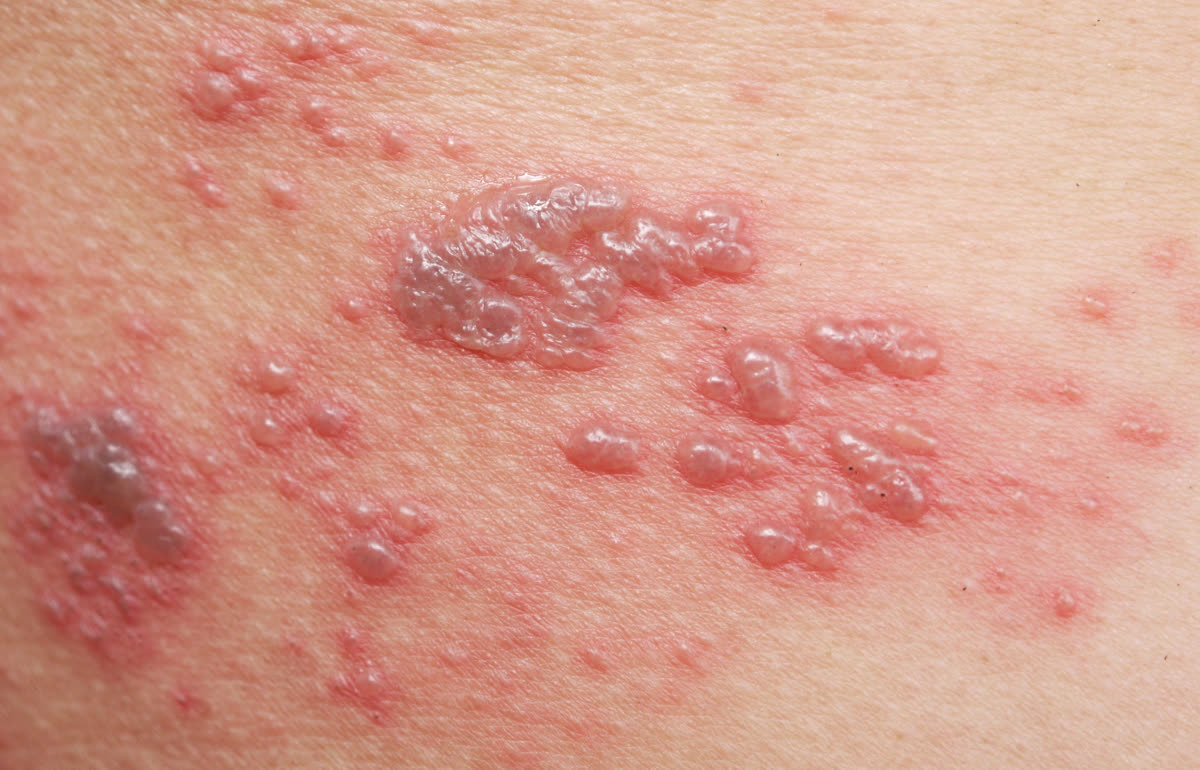
Shingles typically begins with tingling, itching, or pain in one area, followed by a painful rash on one side of the face or body — classically a stripe that does not cross over to the other side. Blisters form and scab over within 7–10 days, clearing up within 2–3 weeks. Additional symptoms can include fever, chills, abdominal or joint pain, swollen glands, and headaches; in people with weakened immune systems, the rash may cover a larger area or even resemble chickenpox.
When shingles affects the facial nerves, it can cause complications such as drooping eyelids, vision problems, difficulty moving facial muscles, or loss of taste — all reasons to be seen quickly.
Treatment and prevention
Shingles can typically be diagnosed with a physical exam. Prescription antiviral drugs are effective in shortening the duration of the rash, preventing complications, and alleviating pain — and they're most effective when started within 72 hours of the onset of pain or rash. For severe cases, antivirals may be administered intravenously. Pain can be managed with analgesic medications, and itching with wet compresses, calamine lotion, and colloidal oatmeal baths.
A shingles vaccine is available and is often recommended for older adults or those at higher risk — it helps prevent the condition or lessen its severity.
Prevention: the Shingrix vaccine is recommended for all adults 50 and older — and for adults 19 and older with weakened immune systems — and is highly effective at preventing shingles and its complications. Ask about it at your next visit or at your pharmacy.
Why fast treatment matters
Two complications make shingles worth treating urgently. Postherpetic neuralgia — nerve pain that can linger for months or longer after the rash heals — becomes less likely when antiviral treatment starts within 72 hours of the rash appearing. And shingles near the eye (on the forehead, the tip of the nose, or around the eye itself) can threaten vision: call us the same day, and if you have eye pain or vision changes, seek care immediately.
Related: Cold Sores & Herpes Simplex · Rashes & Dermatitis
This page is general education, not a diagnosis — see a dermatologist in Peachtree City about your specific skin concern.
Common questions
You can't catch shingles itself from another person — but direct contact with fluid from the blisters can transmit the virus, giving chickenpox (not shingles) to someone who has never had chickenpox or the vaccine. Keep the rash covered until it crusts over, and avoid contact with pregnant women, newborns, and anyone with a weakened immune system until then.
Antiviral medications are most effective when started within 72 hours of the onset of pain or rash — early treatment shortens the rash, helps prevent complications, and eases pain. If you suspect shingles, call promptly.
It's rare, but possible. The virus stays dormant in your body after chickenpox and can reactivate — one reason the shingles vaccine is often recommended for older adults and others at higher risk.
Shingles occurs in people who have had chickenpox or received the chickenpox vaccine — the virus has to already be in your system to reactivate later.
When it involves the face — facial-nerve shingles can cause drooping eyelids, vision problems, difficulty moving facial muscles, or loss of taste — or when your immune system is weakened. And for everyone, the first 72 hours are the treatment window.
Ready to have it looked at?
Same-day and next-day appointments are often available · 4.8 from 360+ Google reviews. Mon–Fri · 7:30am–5:00pm.