
Medical Dermatology
Tinea Versicolor Treatment in Peachtree City, GA
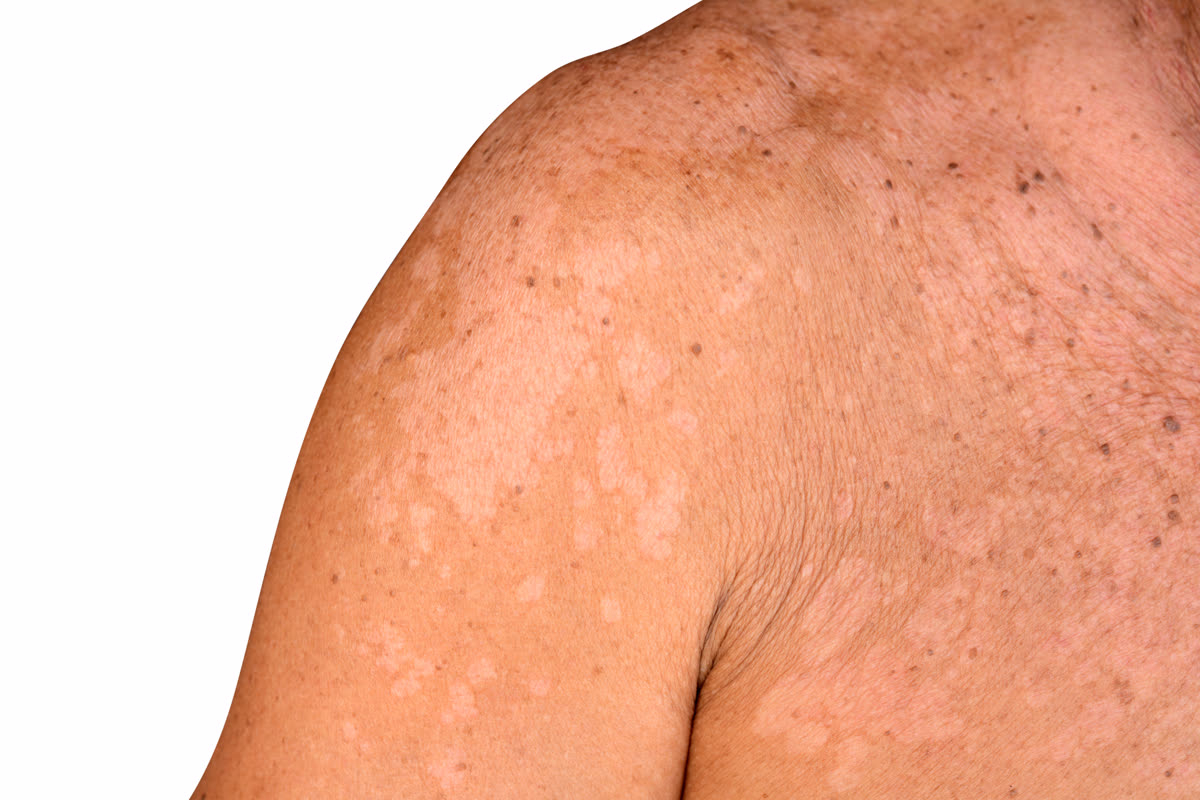
Tinea versicolor is a fungal infection caused by an overgrowth of yeast that lives naturally on everyone's skin — predominantly the species Malassezia globosa, Malassezia furfur, and Pityrosporum ovale. The result is patches that don't match the rest of your skin: lighter on darker skin tones, darker on lighter ones, and often most obvious against a tan. It isn't contagious, and it's very treatable — but because it loves heat and humidity, keeping it away through a Georgia summer takes a little maintenance.
Who gets it, and why
Everyone has this yeast naturally present on their skin; tinea versicolor occurs when it grows excessively. The condition is most prevalent among adolescent boys and young adult males, particularly in hot and humid climates, and it's a common skin disease in tropical and subtropical regions. Excessive sweating, oily skin, and a weakened immune system can all trigger the overgrowth. Tinea versicolor is not contagious — it cannot be spread from person to person.
Symptoms
The primary symptom is discolored patches on the skin: loss of pigment in people with darker skin, darkened spots in those with lighter skin, and a rash that's often more visible on tanned skin. It can spread to the face, arms, legs, or other body areas; affected skin may become dry, scaly, and start to flake, and itching is common. The rash may become more pronounced with sun exposure — and the spots may fade in cooler weather only to return in warmer conditions.
Treatment, and keeping it away
Topical antifungal medications are the primary treatment — commonly clotrimazole, ketoconazole, or miconazole. For more severe cases, oral antifungal medications might be prescribed, though these are typically used short-term because of potential side effects and interactions with other medications.
Because recurrence is common in warm, humid climates, maintenance matters: using a medicated cleanser once or twice a month — particularly during warm or humid months — helps keep the yeast in check, and applying an over-the-counter dandruff shampoo to the affected skin for ten minutes daily can be an effective home treatment.
Related: Athlete's Foot · Rashes & Dermatitis
This page is general education, not a diagnosis — see a dermatologist in Peachtree City about your specific skin concern.
Common questions
No. The yeast that causes it already lives naturally on everyone's skin — the condition is an overgrowth, not something you catch or pass along.
Heat, humidity, sweating, and oily skin feed the yeast, so warm months are its season. The spots often fade in cooler weather and return when it warms up — a medicated cleanser once or twice a month through the warm season helps break the cycle.
Topical antifungals like clotrimazole, ketoconazole, or miconazole are the first line. Severe cases may get a short course of oral antifungals — kept short because of potential side effects and medication interactions. Applying over-the-counter dandruff shampoo to the affected skin for ten minutes daily also works as a home treatment.
Recurrence is simply common with tinea versicolor, especially in hot, humid climates like ours. Maintenance — a medicated cleanser once or twice a month during warm and humid months — is the best defense.
Ready to have it looked at?
Same-day and next-day appointments are often available · 4.8 from 360+ Google reviews. Mon–Fri · 7:30am–5:00pm.